A Lot on Your Plate
Operational Enhancements Abound with the Plate as the Key Identifier Within the Mobility System.
Casey Robinson, MBA, CAPP & Jason Sutton, CAPP
As the urban curb grows increasingly complex, parking and mobility program managers are modernizing operational strategies and introducing new technologies to keep pace. Although there is a range of sophistication to how tech-focused a curb is managed, there are some immediate and straightforward opportunities that will lead to significant improvements. An easily attainable prerequisite for dynamic curb space management is making the license plate the key identifier for participation within a mobility system. This enables an entire range of efficiencies and data gathering capabilities. Real time, quality data can be used to manage the program at an optimized level, educate stakeholders, and aid in decision-making. With insight to operational performance, decisions can be data-driven, rather than based on presumption or anecdotal evidence.
The rules and regulations that govern the curb are only as good as the enforcement behind them. With the license plate as the identifier, enforcement becomes increasingly efficient with the use of an LPR vehicle. Cities can efficiently enforce:
• Expired meters
• Time-limited parking
• Loading zones
• Permit parking
LPR technology provides visibility into enforcement activity and accountability. Urban parking areas frequently evolve with development and changes to the streetscape. Interpreting data trends derived from license plate scans ensures enforcement methodologies parallel the system’s needs. Additionally, occupancy and demand data from license plate scans can be used to make comprehensive decisions about rates, utilization, and policy.
Increasing mobile payment app availability is also a key component of a dynamic curb space management strategy. Relying on the license plate as the transaction identifier, mobile payment apps not only elevate the customer’s parking experience, but also provide several ancillary operational efficiencies and savings. On-street parking programs, like ATLPlus in Atlanta GA, are opening their on-street systems to accommodate multiple mobile payment app options. Parking rates and regulations are administered through a centralized parking payment platform or rate engine. By creating an “open parking ecosystem” customers can initiate paid parking sessions through a mobile payment app of their choice and have the added benefit of participating with available micro mobility and transit options through a unified platform. Increases in customer convenience will further grow mobile app adoption which in turn provides program managers a unique opportunity to have additional and long-term communication with their customers. Mobile payment apps can be used to quickly communicate program information or provide discounted promo-coding to positively influence parking behavior. Additionally, mobile payment app connectivity can act as a gateway for participation with Smart City initiatives.
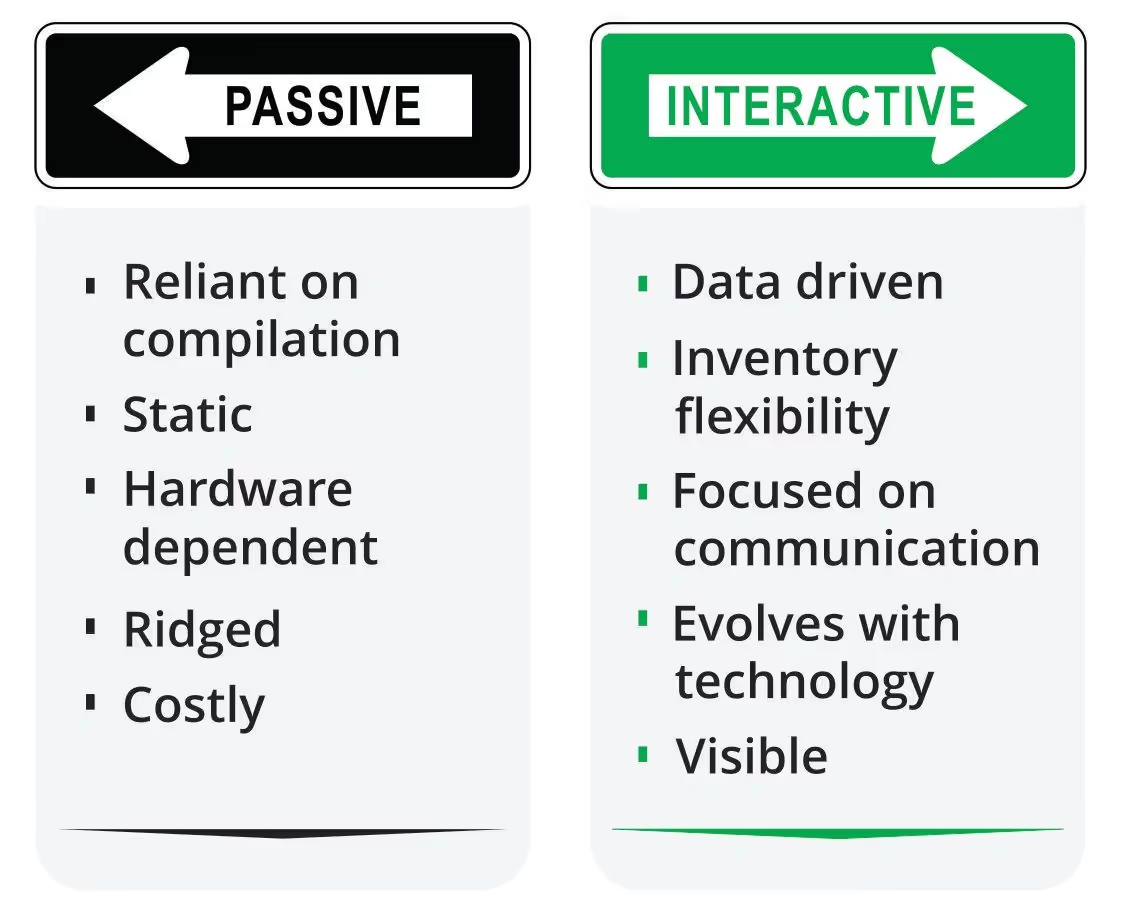
As municipalities begin to incorporate advanced concepts and new technology into their on-street programs to manage an increasingly dynamic curb, it is essential to not overlook the functional benefits of a pay by plate system. Demand for curb access is growing rapidly and the need for flexibility to accommodate accessibility for varied user groups has become an operational necessity. The impact of COVID-19 has reinforced the importance of flexibility, as traditional demand for long duration parking sessions quickly turned to accommodating curbside pick-ups and other short-term transactions. On-street parking systems utilizing pay by plate with a structured mobile payment app zoning approach can nimbly adjust in near real time to best use the curb. Updated rates, rules, regulations, and zone changes can be communicated to users through mobile apps and connected vehicles. Parking programs that incorporate the license plate as an identifier, implement flexible zone structures, and utilize a centralized platform for management can promptly adjust to unforeseen events and widespread changes to customer needs. The COVID-19 pandemic has shown that structuring operations based on pay by plate, with multiple avenues for participation, such as multiple “touchless” mobile payment apps, will not only serve our programs well in normal times, but make our operations more resilient in the face of uncertainty.
Be Part of the Solution
Join SWPTA today and help drive change in parking and transportation. Your involvement shapes the future of mobility. Let’s redefine transportation together.
Join the Movement
Shaping the Future of Parking
SWPTA extends sincere thanks to our sponsors, whose support makes our events, educational programs, and industry initiatives possible.

.avif)