City of Paso Robles: A Customer-First Approach to Parking
In the span of less than one year, Paso Robles went from having no parking restrictions to successfully introducing parking permits, pay stations, mobile payment, and merchant validation.
A Community’s Perception of Parking
As recently as 2018, the City of Paso Robles didn’t have a single on-street time limit or parking meter, the parking municipal codes hadn’t been updated since the 1950s, and the last attempt at paid parking in the early 1980s resulted in a team of cowboys riding into the downtown and roping the meters, wrangling and dragging them from the ground. Even after completing three parking studies, the community in Paso Robles couldn’t come to a consensus as to how to address the lack of convenient customer parking in the downtown core. Vocal community members were adamantly opposed to any on-street policies. Business owners recognized that prime on-street spaces were being utilized primarily by downtown employees, however, many were hesitant to introduce on-street policy change. The parking problem in Paso Robles demanded a creative approach that prioritized customer service while still maintaining the City’s small-town charm.
Innovative Pilot Program
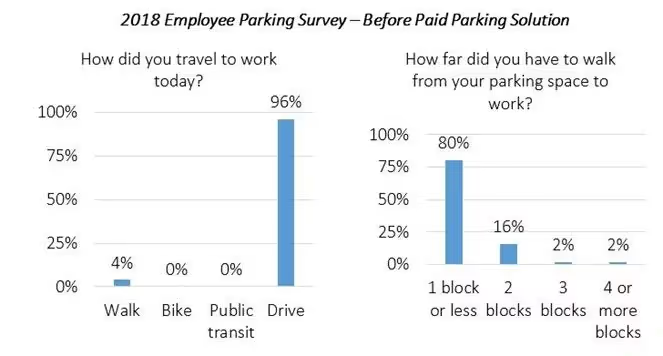
Based on initial surveys and data collection, it became clear that changing employee parking habits could increase on-street parking availability for customers.
The business community believed that education and incentives alone could fix the problem, so the City embarked on a voluntary compliance-based program in the hopes of avoiding the need to implement on-street policies. This provided a unique opportunity to innovate, and more specifically, find a way to build a customer-first parking solution. The City embarked on an innovative employee parking permit pilot program, collected data, and conducted an aggressive stakeholder engagement campaign to test the merits of voluntary compliance.
The goal was to ensure that local business owners and residents, whatever the outcome, became advocates of the preferred solution. The outreach campaign began with community meetings and door-to-door employee surveys at downtown businesses. The goal of this extensive outreach effort was to educate employees about the importance of providing convenient on-street parking for customers. Rather than parking on-street, the City encouraged employees to take advantage of the permit parking program designed to guarantee that participants would have available parking—no more circling the block in search of parking.
The timing of the permit program launch was particularly important due to the approaching December holiday shopping season. Business owners and employees were motivated to improve the customer parking experience.
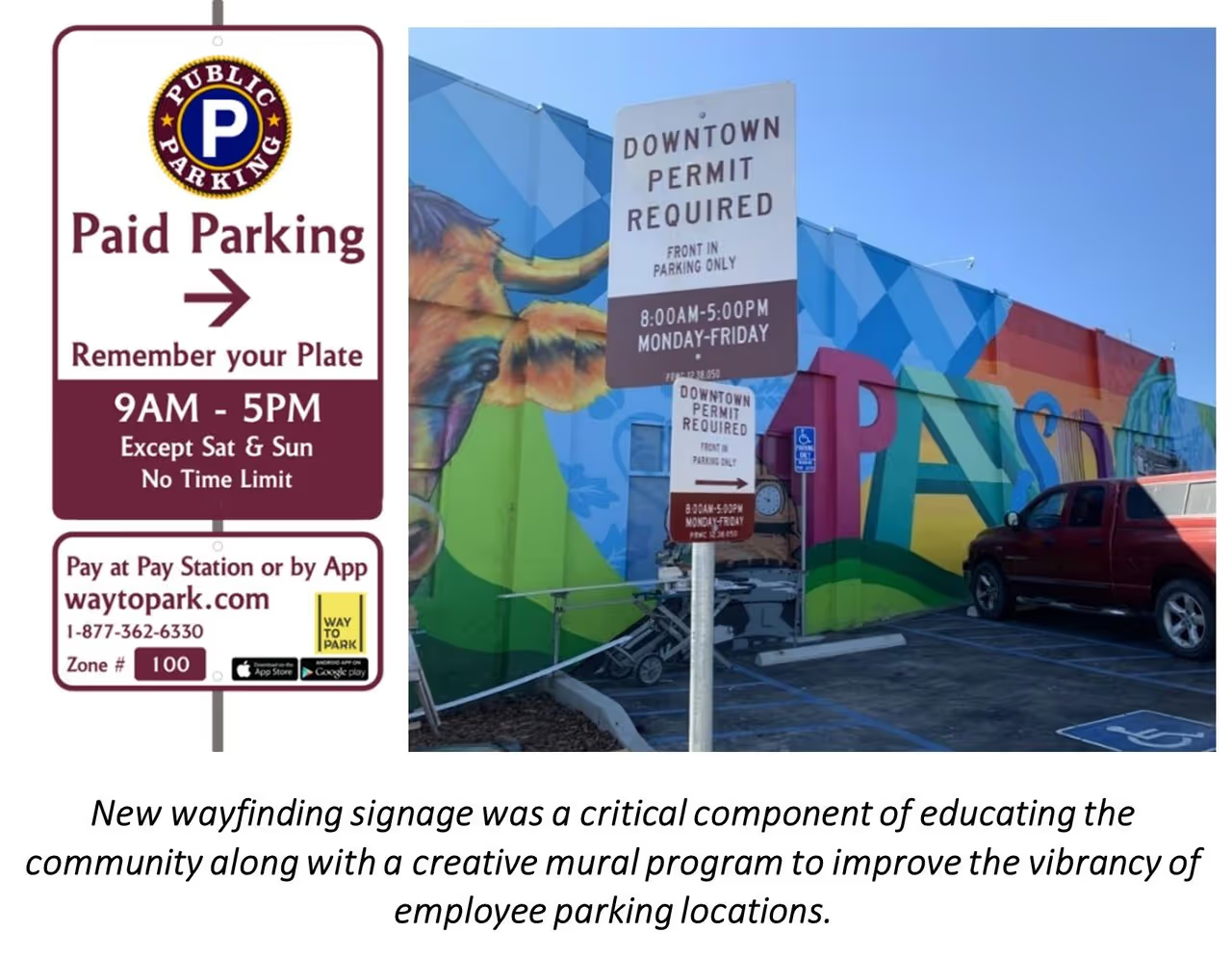
Beginning in November 2018, the City sold employee parking permits for a nominal fee of just $5 a month in several off-street lots surrounding the downtown business district. Everything about the program was designed with customer service in mind, and City staff were closely engaged with the community throughout the entire process to do whatever it took to improve the effectiveness of the program.
The Importance of Stakeholders
Creative stakeholder engagement was essential for educating the public and generating broad community support for the new program. The City targeted over 40 businesses and business owners that involved a consistent presence in the community to guide residents, merchants, and other downtown advocates through ongoing changes. To ensure consistent engagement with the community, the City established a steering committee made up of representatives from downtown businesses, community groups, and City staff. This group provided balanced perspectives and helped craft recommendations to best suit the unique needs of Paso Robles.
Additionally, the City with the help of Dixon Resources Unlimited took a frontline role in the engagement process and regularly shared data analysis findings with the public, held community workshops, staffed an informational booth at downtown events, distributed outreach materials, managed permit application questions, and responded to countless questions and inquiries.
Data-Driven Decisions
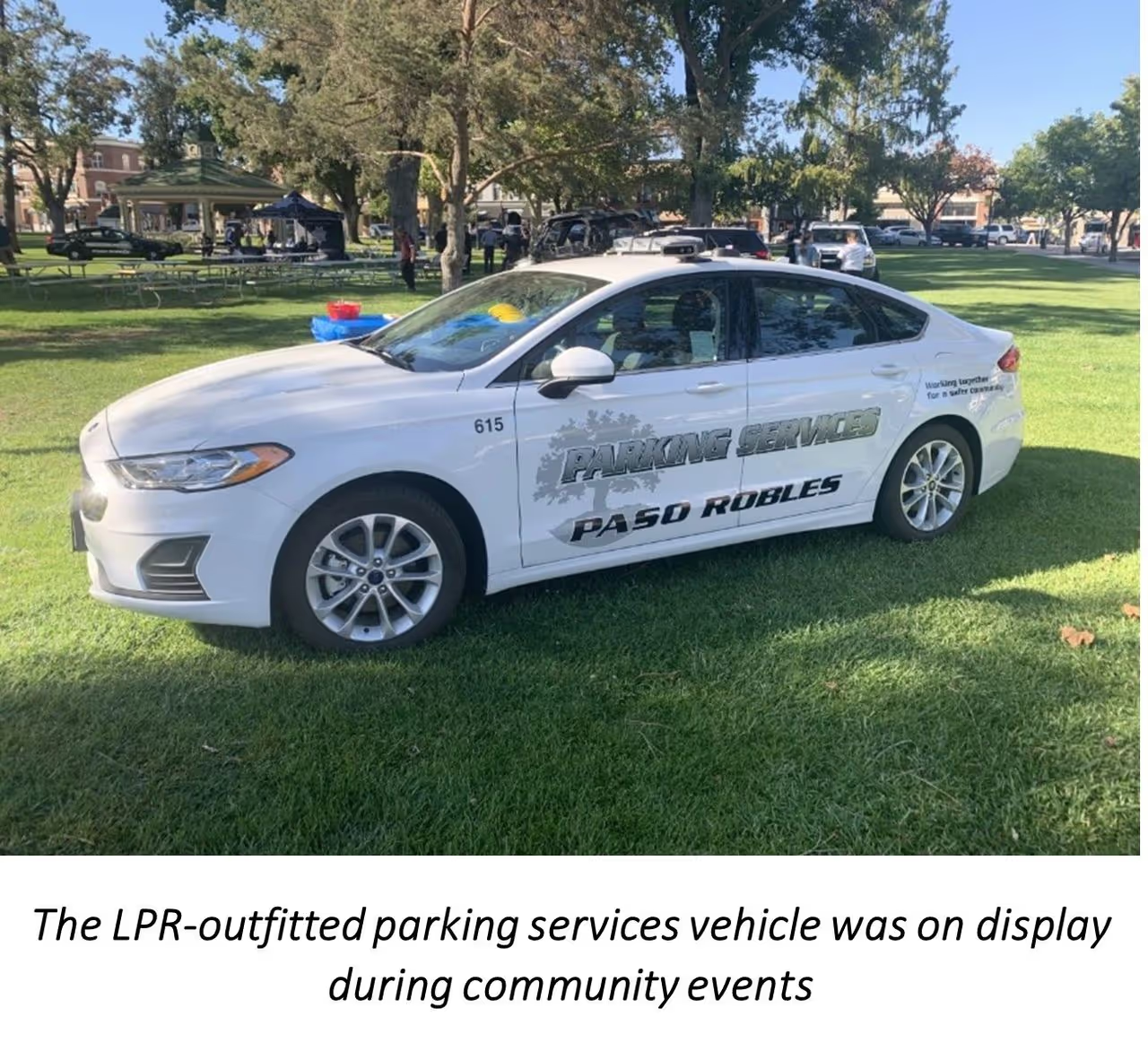
The Paso Robles Police Department created its first-ever Parking Ambassador position to directly support the implementation and enforcement of the pilot program along with a vehicle for license plate recognition (LPR), while Public Works prepared the City-owned parking lots for signage and lighting improvements.
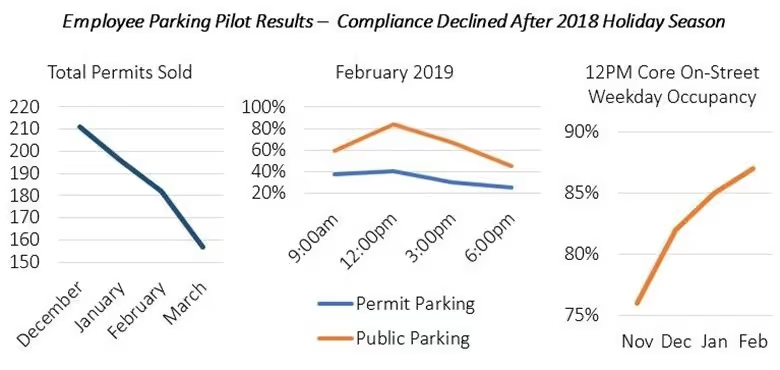
During the six-month pilot between December 2018 and June 2019, the City collected data using LPR cameras. The pilot program enabled the City, without requiring the introduction of time limits or paid parking, to collect the necessary data and feedback to gauge the program’s influence on downtown parking behavior and availability. License plate data collected throughout the pilot provided key insights into the City’s parking occupancy, utilization, and permit program participation.
While the program had high participation at the outset, utilization trends showed that employees continued to park in the unregulated on-street spaces in front of downtown businesses, despite low permit costs, guaranteed parking spaces with a permit, and ongoing education and outreach efforts.
The data-driven results from the pilot program informed residents, downtown merchants, and community stakeholders that on-street policies were necessary to increase parking availability, alleviate management concerns, and free up convenient parking to customers.
The Customer Value Model
The City Manager proposed a unique on-street solution that would provide the benefits of a time limit with additional flexibility in the form of paid parking. This unique model, now referred to as a “Customer Value Model,” provides two hours of free on-street parking per day per license plate number, followed by a $1 per hour pay-to-stay rate. This innovative approach to on-street parking was completely new and relied upon a collaborative effort with the City’s parking technology vendors to execute. The entire solution was designed to be license plate-based to allow the City to track free parking time, enforce with LPR, and provide opportunities for unique validation and incentive programs. The Customer Value Model for paid parking is the perfect blend between time limits and paid parking. This innovative approach, combined with the extensive amount of data collected during the pilot, allowed City Council to hopscotch over traditional on-street policies and implement a solution tailored to the community’s priorities. No other program has used this approach for managing on-street parking to achieve an emphasis on customers and a balance of time limits and pay-to-stay. This unique rate model supports the relationship between downtown businesses and patrons, allowing visitors to enjoy the historic movie theater, restaurants, and shops all in one affordable visit.
Parking Ambassador Approach
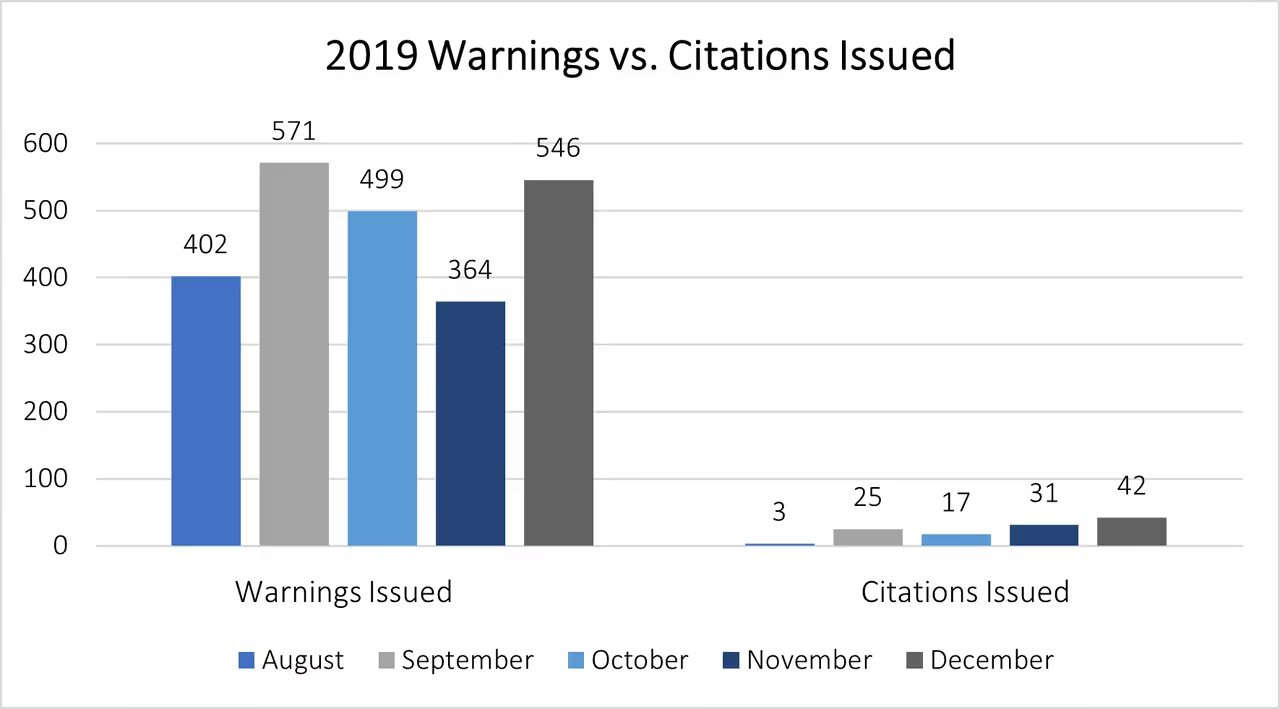
Often, parking enforcement staff may be the only interaction that visitors have with the City, so positive representation of the community is crucial. The example set by Paso Robles’s compliance-based approach to enforcement includes issuing warning notices for first-time offenders, educating drivers on regulations, and answering customer questions. Not only did the City creatively use this approach throughout the entire process, but this model can be widely used by other projects seeking to positively engage the community.
Widespread Success
The employee parking program and Customer Value Model utilized in Paso Robles are adaptable and scalable to other agencies seeking to alleviate employee parking problems in downtown areas. The first two hours free policy is easily adaptable to other agencies and generates positive feedback, even from business communities that are traditionally against paid parking. The blend of time limits and paid parking provides maximum flexibility for customers while still addressing the core root of the employee parking problem. The program supports economic development in the City’s downtown core through the increased availability of on-street customer parking for local businesses while providing ample and convenient parking for employees. Proof of the program was accomplished by leveraging key technology vendor partnerships, and the program continues to be operated to support affordable permit rates and customer convenience for everybody who visits downtown. In less than a year, the City built a sustainable parking program, improving the overall quality of the downtown through effective and innovative parking management.
Pandemic Response
The City of Paso Robles has conducted a proactive response to COVID-19. On March 17, the City exempted delivery vehicles providing active pick-up and delivery services from downtown parking restrictions. Additionally, all monies generated from the downtown paid parking program through the end of April were donated to provide relief to downtown. Between April and June, the City did not issue any warnings or citations for the parking enforcement program. By July, Paso Robles launched its “Get Outside in Paso” on-street dining program, which provides downtown restaurants with outdoor dining options in protected on-street parking spaces, substantially reducing available parking inventory in the downtown core. As part of this program, the City invested in barriers to protect outdoor patrons. To measure the impacts of the on-street dining program and wider downtown recovery, the City has conducted LPR data collection and continues to take coordinated measures to support businesses and ensure a swift economic recovery.
Project Team
The team responsible for delivering the parking solution is composed of leadership in the Paso Robles Police Department, City Manager’s Office, Community Development, Public Works Department, and partnerships with external groups such as the Chamber of Commerce and Downtown Main Street Association, in addition to Dixon Resources Unlimited.
Related Blogs
.avif)
Customer Service
Be Part of the Solution
Join SWPTA today and help drive change in parking and transportation. Your involvement shapes the future of mobility. Let’s redefine transportation together.
Join the Movement
Shaping the Future of Parking
SWPTA extends sincere thanks to our sponsors, whose support makes our events, educational programs, and industry initiatives possible.

.avif)